




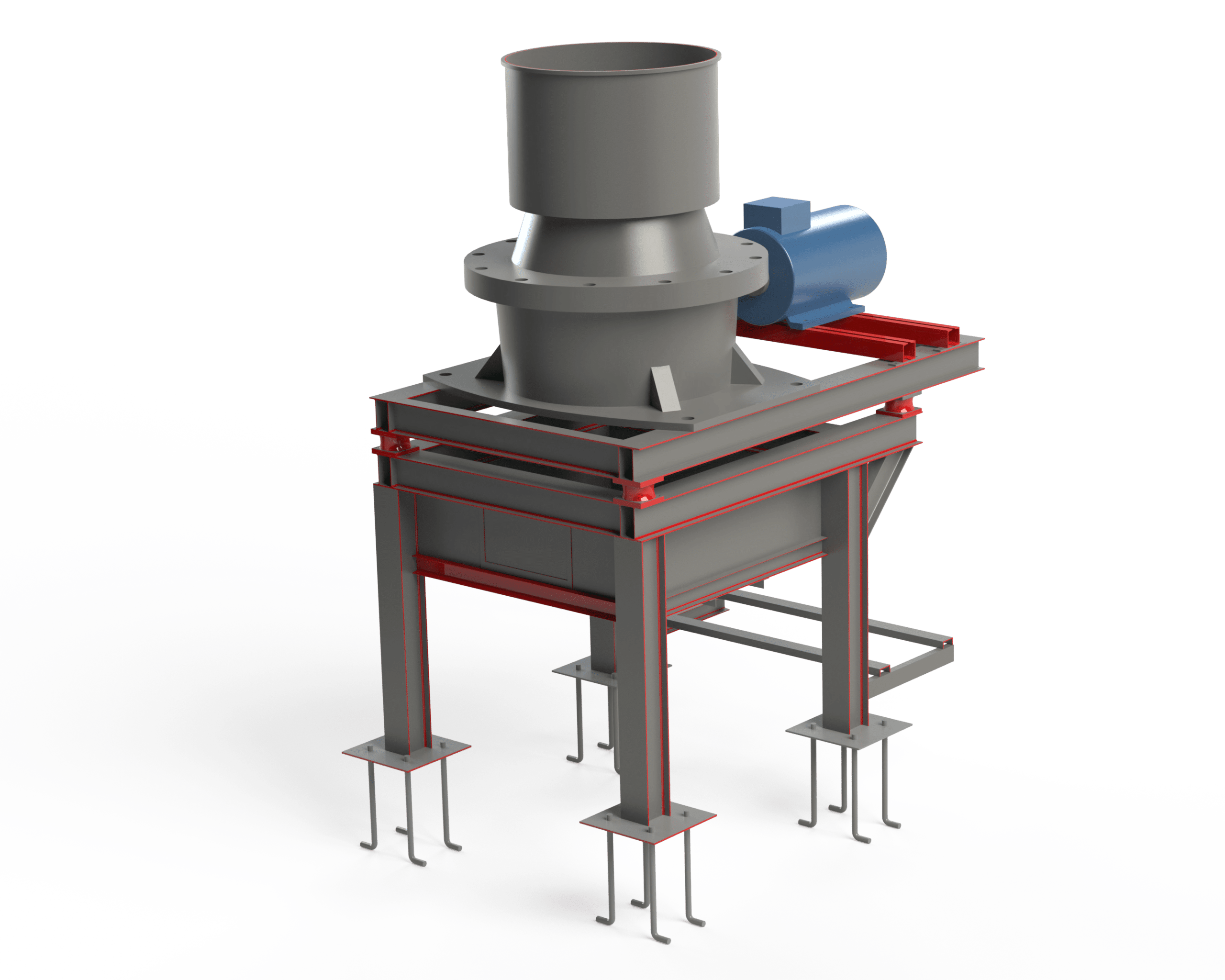

Cone crushers are widely used in mining, quarrying, aggregate production, and mineral processing applications where consistent reduction of hard and abrasive materials is required. A properly selected cone crusher can provide reliable crushing performance, controlled product sizing, and continuous operation in demanding environments.
For Canadian operations, choosing the right rock crusher machine requires more than comparing equipment size or purchase price. Feed material, required capacity, desired product size, operating conditions, maintenance requirements, and application all affect the right crusher configuration.
Whether you are looking for a complete rock crusher machine in Canada, comparing rock crusher machine prices, or searching for a small rock crusher for sale, the equipment should be selected based on the actual requirements of your crushing process.
| Requirement | Recommended Consideration |
|---|---|
| Hard and abrasive rock | Heavy-duty cone crusher |
| High production capacity | Industrial cone crusher |
| Secondary crushing | Standard cone crusher configuration |
| Tertiary crushing | Fine-crushing chamber configuration |
| Small-scale operation | Small rock crusher |
| Aggregate production | Cone crusher with appropriate chamber and screening circuit |
| Mining application | Crusher selected according to ore characteristics and throughput |
| Budget-sensitive project | Compare total cost of ownership, not purchase price alone |
Cone Crushers for Mining and Aggregate Applications
Cone crushers are designed for secondary, tertiary, and sometimes quaternary crushing applications. They operate by compressing material between a rotating mantle and a stationary concave.
As the material enters the crushing chamber, it is progressively compressed and reduced in size. The controlled crushing action makes cone crushers suitable for producing consistent aggregate and mineral products.
Typical applications include:
- Hard rock crushing
- Aggregate production
- Quarry operations
- Mining operations
- Mineral processing
- Construction materials
- Road base production
- Manufactured sand and fine aggregate applications
- Secondary and tertiary crushing circuits
The appropriate cone crusher depends on the characteristics of the feed material and the required final product.
How Does a Cone Crusher Work?
A cone crusher uses compression to break rock and other hard materials.
The main components typically include:
- Main frame
- Mantle
- Concave
- Eccentric assembly
- Drive system
- Crushing chamber
- Hydraulic or mechanical adjustment system
- Lubrication system
Material enters the crushing chamber from the top. The mantle moves within the chamber as the eccentric mechanism rotates. This movement creates repeated compression between the mantle and concave.
The crushed material moves downward through the chamber and exits once it reaches the required size.
Crusher settings can influence the final product size and overall crushing performance. For this reason, crusher selection and configuration should be based on the material characteristics, required capacity, and target product specifications.
Rock Crusher Machines in Canada
Canadian mining and aggregate operations can involve a wide range of materials, from relatively soft rock to highly abrasive hard rock.
A rock crusher machine in Canada may be used for applications involving:
- Granite
- Basalt
- Limestone
- Gravel
- Quartz
- Ore
- Construction aggregates
- Recycled mineral materials
Operating conditions can also vary significantly between applications. Temperature, feed characteristics, production requirements, site conditions, and maintenance access should all be considered when selecting crushing equipment.
A crusher designed for one application may not deliver the same performance in another.
Selecting the Right Rock Crusher
Before choosing a rock crusher machine, consider:
Feed material: What type of rock or mineral will be processed?
Feed size: What is the maximum size of material entering the crusher?
Required capacity: How many tonnes per hour must the system process?
Final product size: What particle size or gradation is required?
Material abrasiveness: Highly abrasive materials can significantly affect wear rates.
Moisture and fines: Feed conditions can influence crushing performance and chamber operation.
Operating environment: Canadian installations may require consideration of seasonal and site-specific operating conditions.
Maintenance requirements: Access to wear components and service points should be considered during equipment selection.
Small Rock Crusher for Sale
Not every operation requires a large crushing plant.
A small rock crusher for sale can be suitable for smaller aggregate operations, limited production requirements, pilot projects, compact processing sites, and applications where equipment footprint is an important consideration.
When evaluating a small rock crusher, do not focus only on its physical size. Important factors include:
- Maximum feed size
- Crushing capacity
- Motor or power requirements
- Discharge size
- Crushing chamber configuration
- Wear component availability
- Maintenance access
- Mobility requirements
- Operating costs
- Application requirements
A smaller machine can be the right solution when production requirements are moderate. However, selecting equipment based only on a low purchase price can result in insufficient capacity or higher operating costs over time.
Rock Crusher Machine Price in Canada
The rock crusher machine price in Canada depends on the equipment configuration and the requirements of the application.
There is no single price that applies to every rock crusher or cone crusher. Equipment cost can vary according to:
- Crusher type and model
- Production capacity
- Feed and discharge size
- Motor and drive configuration
- Crushing chamber
- Automation and controls
- Hydraulic systems
- Wear-resistant components
- Included accessories
- New or used equipment condition
- Installation requirements
- Transportation and site requirements
For this reason, comparing machines only by purchase price may not provide an accurate picture of the overall value.
A lower-cost crusher may require more frequent maintenance or have lower production capacity, while a higher-specification machine may provide greater throughput and longer service intervals for a demanding application.
What Should Be Included in a Crusher Price?
When comparing equipment quotes, consider the complete system rather than the crusher alone.
Depending on the project, the overall investment may include:
- Crusher equipment
- Feed hopper
- Conveyors
- Screening equipment
- Electrical systems
- Control systems
- Hydraulic equipment
- Wear parts
- Installation
- Commissioning
- Transportation
- Spare parts
- Maintenance support
Understanding what is included in each quotation makes it easier to compare different crushing solutions accurately.
Cone Crusher Applications
Cone crushers can be integrated into different stages of a crushing circuit.
Secondary Crushing
After primary crushing reduces large rocks to a manageable size, a cone crusher can further reduce the material for downstream processing.
Tertiary Crushing
Cone crushers can also be used for finer crushing where a more controlled product size is required.
Mineral Processing
In mining applications, cone crushers may be used as part of a larger mineral processing circuit before screening, grinding, separation, or other processing stages.
Aggregate Production
Cone crushers are commonly used to produce controlled aggregate sizes for construction and infrastructure applications.
Cone Crusher Maintenance
Regular maintenance is essential for reliable crushing operations.
A maintenance program may include:
- Lubrication system inspections
- Hydraulic system checks
- Wear component inspections
- Mantle and concave monitoring
- Drive system inspection
- Bearing checks
- Fastener inspection
- Vibration monitoring
- Temperature monitoring
- Crusher setting verification
- Cleaning and general equipment inspection
Wear components should be inspected regularly because excessive wear can affect product quality, capacity, and energy consumption.
Preventive maintenance can also help identify developing mechanical problems before they result in unexpected downtime.
New vs. Used Rock Crusher Machines
When purchasing crushing equipment, businesses may consider both new and used machines.
New Rock Crushers
New equipment can provide:
- Latest equipment specifications
- New wear components
- Manufacturer support
- Updated controls and safety systems
- Greater configuration flexibility
Used Rock Crushers
Used equipment may offer a lower initial investment and can be suitable for certain projects.
However, the condition of the crusher should be carefully evaluated before purchase.
Important inspection points include:
- Overall structural condition
- Crushing chamber
- Mantle and concave condition
- Bearings
- Drive system
- Hydraulic components
- Lubrication system
- Previous operating history
- Maintenance records
- Availability of replacement parts
The lowest purchase price is not always the lowest total cost of ownership.
Choosing a Rock Crusher Machine in Canada
The right crushing equipment should be selected according to the complete application rather than a single specification.
A practical evaluation should answer the following questions:
- What material will be crushed?
- What is the maximum feed size?
- What capacity is required?
- What final product size is required?
- How abrasive is the material?
- How many hours per day will the crusher operate?
- What type of crushing circuit will be used?
- What level of automation is required?
- What maintenance resources are available?
- What are the transportation and installation requirements?
Answering these questions helps narrow down the appropriate crusher configuration.
Why Choose the Right Crusher Configuration?
Crusher performance is not determined by the machine alone.
The interaction between the crusher, feed material, screening equipment, conveyors, and downstream processes can have a significant impact on overall plant performance.
A properly designed crushing circuit can help:
- Maintain consistent product sizing
- Improve material flow
- Reduce unnecessary recirculation
- Manage wear
- Improve equipment utilization
- Reduce unplanned downtime
- Support consistent production
For this reason, crusher selection should consider the complete process rather than treating the crusher as an isolated piece of equipment.
Request a Rock Crusher Solution in Canada
Looking for a rock crusher machine in Canada or comparing options for a new crushing application?
Magnocan can help you evaluate your crushing requirements and identify equipment considerations based on your material, production capacity, feed size, final product requirements, and operating conditions.
Whether you are evaluating a small rock crusher for sale, a cone crusher for aggregate production, or a larger crushing solution for mining, the right equipment should be selected around your process requirements.
Contact Magnocan to discuss your application and request a customized equipment recommendation.
Frequently Asked Questions
What is a cone crusher used for?
Cone crushers are primarily used for secondary, tertiary, and sometimes quaternary crushing of hard and abrasive materials. They are widely used in mining, quarrying, aggregate production, and mineral processing.
How much does a rock crusher machine cost in Canada?
The price of a rock crusher machine in Canada depends on factors such as crusher type, capacity, configuration, feed size, discharge requirements, automation, wear components, and installation requirements. A project-specific quotation provides a more accurate estimate than a general price range.
What is the best small rock crusher for sale?
The best small rock crusher depends on the material, required production capacity, feed size, desired output size, and operating conditions. A smaller crusher should be selected according to the actual application rather than purchase price alone.
Are cone crushers suitable for hard rock?
Yes. Cone crushers are commonly used for hard and abrasive materials. However, the crusher configuration, chamber, wear components, and operating conditions should be selected according to the specific material.
What should I consider before buying a rock crusher?
Consider feed material, maximum feed size, required capacity, final product size, abrasiveness, crusher configuration, maintenance requirements, available spare parts, installation conditions, and total operating cost.
Can a cone crusher be used in a complete crushing plant?
Yes. Cone crushers can be integrated with primary crushers, screens, conveyors, feeders, and other equipment to create a complete crushing circuit.
Selecting the right cone crusher or rock crusher machine in Canada requires more than comparing equipment prices.
The ideal solution depends on the material being processed, required capacity, feed size, target product, abrasiveness, operating conditions, maintenance requirements, and overall crushing circuit.
Whether you are searching for a rock crusher machine in Canada, comparing rock crusher machine prices, or looking for a small rock crusher for sale, evaluating the complete application can help you make a more reliable equipment decision.
Talk to Magnocan about your crushing application and request a quote.
Reviews
Clear filtersThere are no reviews yet.