




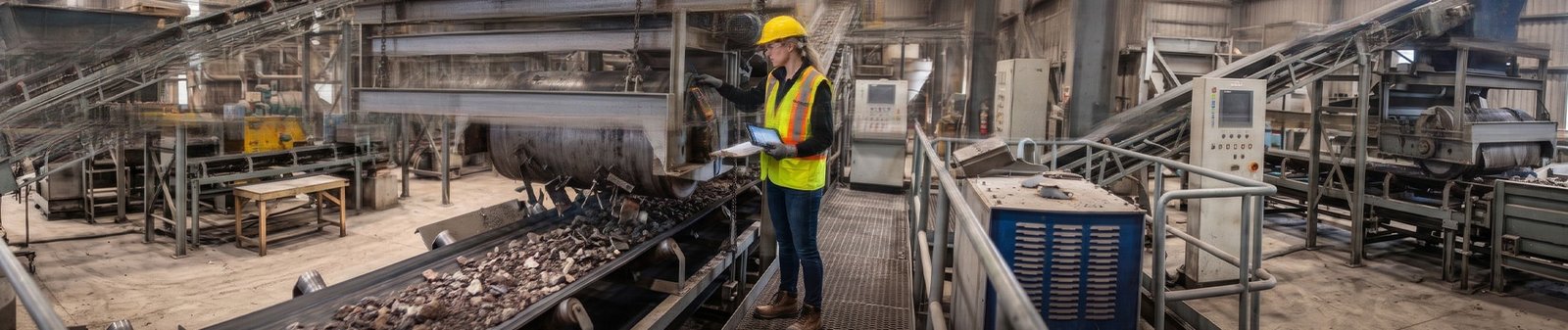
Regular magnetic separator inspections are an important part of maintaining reliable separation performance and protecting your production equipment. Over time, magnets, housings, mechanical components, seals, bearings, and other parts can experience wear or contamination buildup that may reduce efficiency.
At Magnocan, inspections are designed to identify potential problems early and provide a clear understanding of your separator’s current condition. Our team evaluates both the magnetic performance and mechanical condition of the equipment, helping you avoid unexpected failures and unnecessary downtime.
Magnetic Separator Inspection - Service Overview
| Service Area | What We Inspect | Why It Matters |
|---|---|---|
| Magnetic Performance | Magnetic strength and field consistency | Ensures effective metal separation |
| Gauss Testing | Magnetic field strength at key points | Confirms separator performance |
| Magnetic Elements | Magnets, tubes, plates, and assemblies | Identifies damage or performance loss |
| Mechanical Components | Bearings, shafts, drives, and moving parts | Prevents unexpected equipment failure |
| Housing & Structure | Housing, frames, seals, and connections | Detects wear, corrosion, or damage |
| Material Flow | Product flow and contamination buildup | Helps maintain efficient separation |
| Cleaning System | Cleaning mechanism and access points | Ensures consistent magnetic performance |
| Contamination Control | Ferrous particles and buildup | Reduces product contamination risks |
| Maintenance Assessment | Overall equipment condition | Helps plan preventive maintenance |
| Repair Recommendations | Damaged or worn components | Reduces unplanned downtime |
| Upgrades & Refurbishment | Magnets and system components | Extends equipment life and improves performance |
| Inspection Report | Findings and recommended actions | Provides a clear maintenance roadmap |
Why Are Regular Inspections Important?
A magnetic separator may continue operating even when its performance has gradually declined. Without regular inspection, reduced magnetic strength or mechanical wear may go unnoticed until it affects production.
Scheduled inspections can help:
Maintain Magnetic Performance
Verify that magnetic elements continue to provide the required level of separation.
Prevent Equipment Failure
Identify worn or damaged components before they result in unexpected breakdowns.
Reduce Unplanned Downtime
Early detection allows maintenance to be scheduled around production requirements rather than responding to an emergency.
Extend Equipment Life
Regular inspection and timely maintenance can help maximize the service life of magnetic separation equipment.
Protect Product Quality
Maintaining effective magnetic separation helps reduce the risk of ferrous contamination reaching the finished product.
When Should a Magnetic Separator Be Inspected?
Inspection frequency depends on the separator type, operating conditions, material being processed, contamination levels, and production schedule.
An inspection may be particularly valuable when:
- Separation performance appears to have decreased
- Metal contamination is being detected downstream
- The equipment has been operating continuously for an extended period
- Unusual vibration, noise, or mechanical wear is observed
- The magnetic system has been repaired or modified
- Production requirements have changed
- The equipment has been moved or reinstalled
- You are planning a plant upgrade or retrofit
For critical production systems, scheduled inspections and preventive maintenance are generally more effective than waiting for a performance problem to occur.
When Should a Magnetic Separator Be Inspected?
Inspection frequency depends on the separator type, operating conditions, material being processed, contamination levels, and production schedule.
An inspection may be particularly valuable when:
- Separation performance appears to have decreased
- Metal contamination is being detected downstream
- The equipment has been operating continuously for an extended period
- Unusual vibration, noise, or mechanical wear is observed
- The magnetic system has been repaired or modified
- Production requirements have changed
- The equipment has been moved or reinstalled
- You are planning a plant upgrade or retrofit
For critical production systems, scheduled inspections and preventive maintenance are generally more effective than waiting for a performance problem to occur.
What is a magnetic separator inspection?
A magnetic separator inspection evaluates the condition, magnetic performance, and mechanical components of your equipment to identify potential issues before they affect production.
What does a magnetic separator inspection include?
Inspections can include visual checks, magnetic strength testing, Gauss testing, mechanical inspections, housing checks, cleaning-system assessment, and evaluation of material flow.
How often should magnetic separators be inspected?
Inspection frequency depends on the equipment, application, operating conditions, and production environment. Critical systems may benefit from scheduled preventive inspections.
Why is magnetic separator inspection important?
Regular inspections help maintain separation efficiency, protect equipment, reduce contamination risks, and minimize unexpected downtime.
Request a Magnetic Separator Inspection
Tell us about your equipment, application, and service requirements. Our technical team will review your inquiry and recommend the right inspection, testing, maintenance, or repair solution for your operation.