





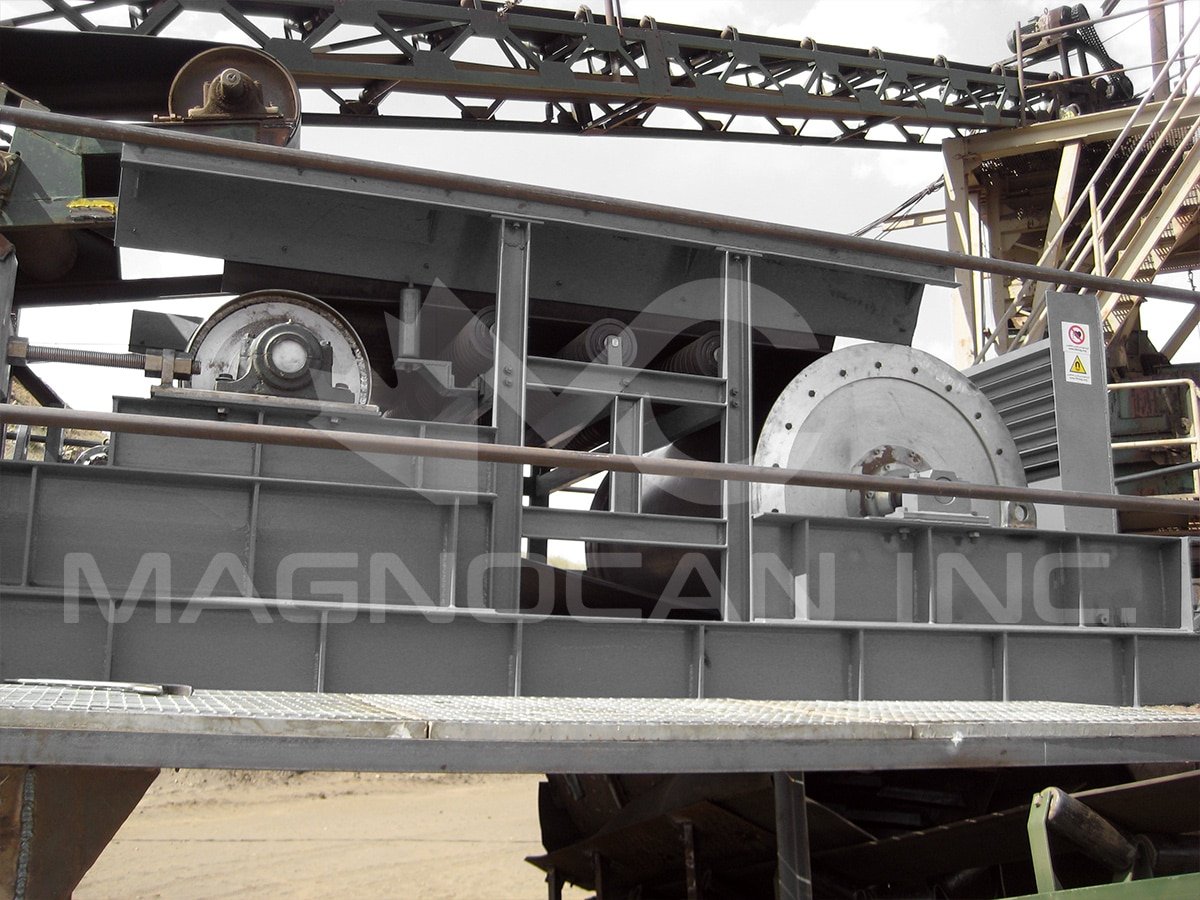
Belt Drum Magnetic Separator: Introduction, Operation, and Applications
The belt drum magnetic separator is a key piece of mineral processing equipment, playing a vital role in enhancing the quality and purity of raw materials. Designed to separate ferrous and magnetic particles from non-magnetic substances, it is considered one of the most widely used machines in both mining and industrial production lines.
The separator consists of a magnetic drum and a conveyor belt. Once the material enters the system, it is carried on the belt through a powerful magnetic field generated by the drum. During this process, magnetic and ferrous particles are attracted to the drum surface and separated from the flow, while non-magnetic materials continue along the belt and are discharged as tailings.
Thanks to their high efficiency, continuous operation, and ability to work under both dry and wet conditions, belt drum separators hold a unique position across various industries. They are not only used in iron ore mines and mineral processing plants but also in steel production, cement and ceramics, metal recycling, and even food processing industries where the removal of unwanted ferrous particles is critical.
Other major benefits include reduced operating costs, higher product quality, and improved production line efficiency. Choosing the right type of belt drum separator (permanent or electromagnetic, with varying field strengths and custom designs) based on ore characteristics and plant capacity is crucial for optimal performance.
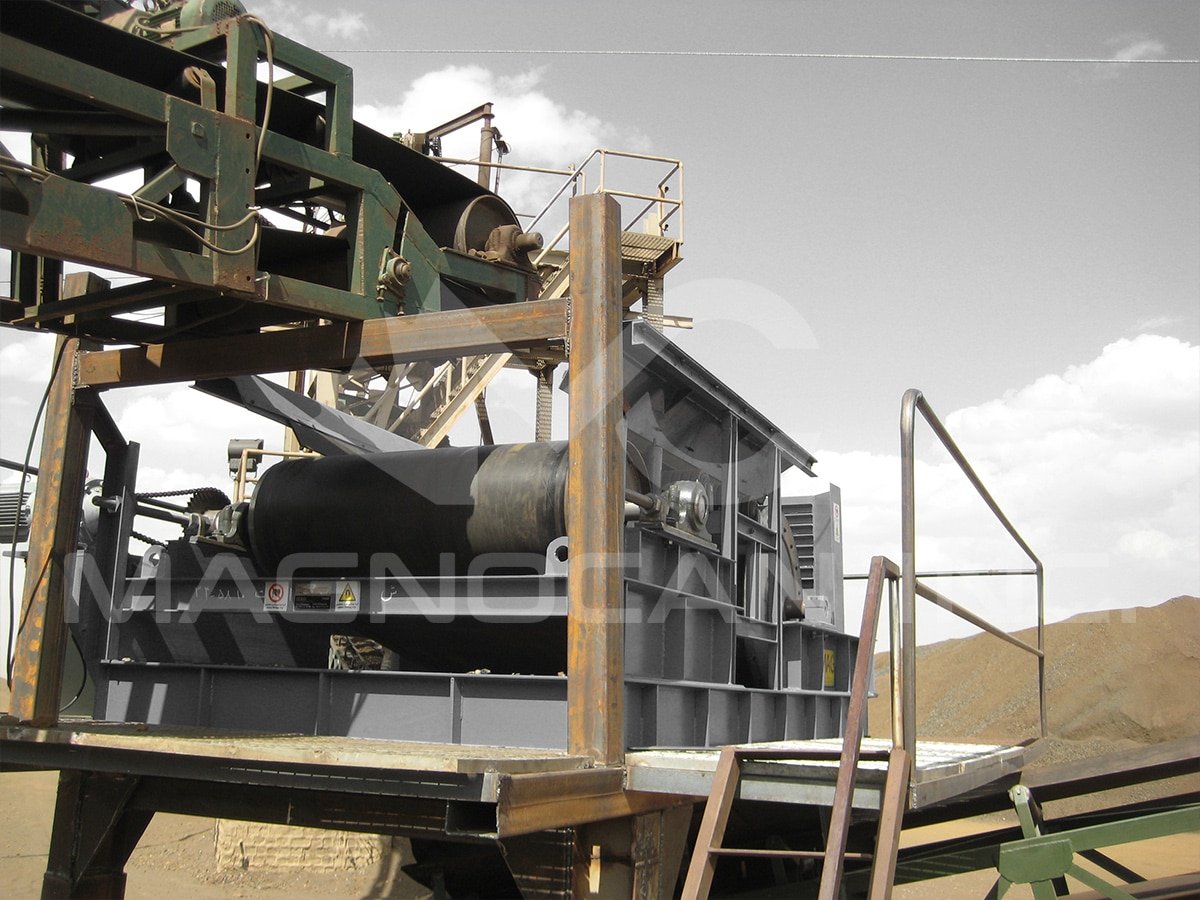
Main Components of a Belt Drum Separator
The housing and conveyor belt form the structural backbone of a belt drum magnetic separator. The housing is typically made of wear-resistant steel or stainless steel, designed to withstand heavy loads, constant impact, and abrasive materials. Its robust construction not only protects the internal components but also ensures the machine can operate continuously under demanding industrial conditions. The conveyor belt, meanwhile, carries materials smoothly across the magnetic drum. Constructed from heat- and abrasion-resistant rubber or reinforced PVC, the belt prevents spillage, ensures even material distribution, and plays a critical role in maintaining the consistency and efficiency of the separation process.
At the core of the separator lies the magnetic drum system, which contains either permanent magnets or electromagnets depending on operational requirements. Magnetic intensity is carefully selected based on the type and size of the material being processed: Low Intensity Magnetic Separators (LIMS) are ideal for coarse, strongly magnetic particles, Medium Intensity Magnetic Separators (MIMS) target finer or weaker magnetic materials, and High Intensity Magnetic Separators (HIMS) are used for ultra-fine or low-magnetic particles. Correct configuration of the magnetic system is crucial for maximizing recovery rates, minimizing tailings, and ensuring superior product quality throughout the processing line.
A belt drum magnetic separator is composed of several key components, each designed to maximize durability, separation efficiency, and ease of maintenance.
Housing and Belt
The housing of a belt drum magnetic separator is typically constructed from wear-resistant steel or stainless steel, offering robust protection against impact, abrasion, and the heavy load of processed materials. Engineered to withstand the combined pressure of both the drum and conveyor belt, it ensures durable and reliable operation under demanding industrial conditions. The conveyor belt, made from heat- and abrasion-resistant rubber or reinforced PVC, transports material smoothly and evenly across the drum, preventing spillage and ensuring consistent flow. A well-designed belt is essential for maintaining the efficiency and uniformity of the separation process, directly impacting overall recovery and product quality.
Magnetic System
The magnetic system serves as the core of the belt drum separator, with either permanent magnets or electromagnets installed inside the drum to generate the necessary magnetic field. The type and strength of the magnetic field are carefully selected according to the material being processed: Low Intensity Magnetic Separators (LIMS) are used for coarse particles with strong magnetic properties, Medium Intensity Magnetic Separators (MIMS) target finer particles or ores with weaker magnetic responses, and High Intensity Magnetic Separators (HIMS) are designed for ultra-fine or low-magnetic materials. Proper configuration and alignment of the magnets are crucial to achieving higher recovery rates, minimizing tailings, and enhancing the overall quality of the separated product.
- Low Intensity (LIMS): For coarse particles with strong magnetic properties.
- Medium Intensity (MIMS): For finer particles or ores with weaker magnetic response.
- High Intensity (HIMS): For ultra-fine or low-magnetic materials.
The correct configuration of magnets ensures higher recovery rates, reduced tailings, and improved product quality.
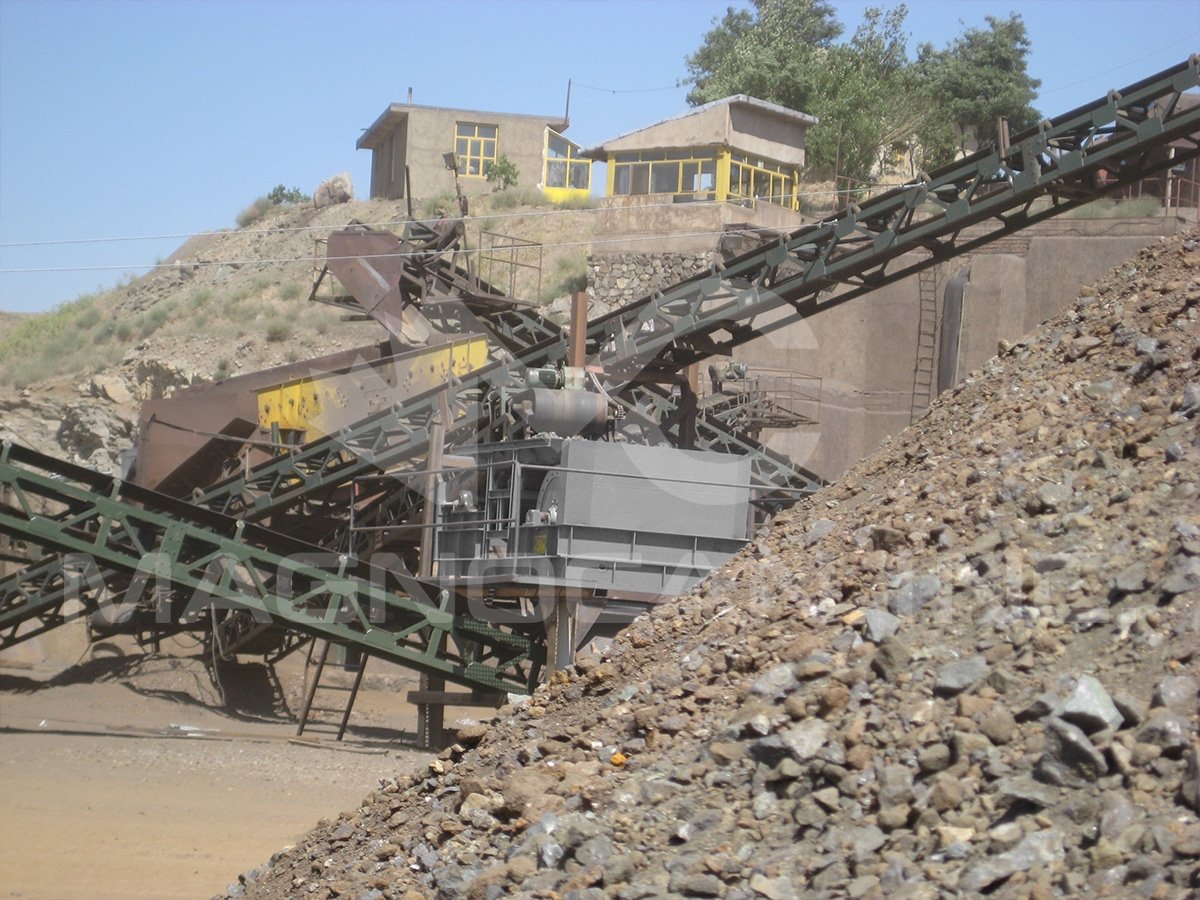
Working Principle and Separation Mechanism
The belt drum magnetic separator operates by combining the movement of material on a conveyor belt with the magnetic field generated by the drum, enabling efficient separation of ferrous and magnetic particles from non-magnetic materials. During feeding, material enters the system through a hopper or feeder and is evenly distributed across the belt. As the belt moves the material toward the drum (conveying), thin, uniform layers enhance separation efficiency. In the magnetic interaction phase, magnetic particles are attracted to the drum surface, while non-magnetic particles continue along the belt unaffected. During separation and discharge, ferrous materials are carried by the rotating drum until the magnetic field weakens, after which they are released into a magnetic product bin, while non-magnetic material is discharged as tailings. This process not only upgrades the product by increasing iron ore grade but also improves overall purity, and when multiple separators are used in series, recovery efficiency can exceed 95%.
- Industrial Applications
- Iron Ore Mining and Mineral Processing
- Ore beneficiation, silica/alumina reduction, and concentrate quality improvement.
- Steel Industry and Scrap Recycling
- Separation of iron from scrap, recovery of metallic waste, and contamination removal before smelting.
- Cement and Ceramics
- Removal of iron particles from raw materials (clay, limestone, feldspar) to ensure high-quality cement, tiles, and ceramics.
- Food Industry
In the food industry, belt drum magnetic separators are essential for the elimination of small ferrous contaminants from products such as flour, sugar, and spices. By removing these unwanted metal particles, manufacturers can ensure that their products meet stringent HACCP and ISO 22000 safety standards, protecting consumer health and maintaining regulatory compliance. This application is particularly important for preventing equipment damage and contamination in downstream processing.
In recycling and waste management, belt drum magnetic separators play a crucial role in the separation of metals from various materials. They are widely used in scrap yards, e-waste processing, automotive recycling, and construction debris management. By efficiently extracting ferrous metals from mixed waste streams, these separators help recover valuable resources, reduce landfill volume, and improve the overall efficiency of recycling operations.
The advantages of belt drum magnetic separators include high separation efficiency and continuous operation, which ensures consistent material processing. They also improve product purity and reduce contamination, leading to higher-quality outputs. Additionally, these separators help cut costs by minimizing losses and maximizing recovery, and their versatility allows them to operate effectively under both dry and wet conditions, making them suitable for a wide range of industrial applications.
Despite their benefits, belt drum magnetic separators also have some limitations. They require regular maintenance, including belt replacement, inspection, and calibration, to ensure optimal performance. Their efficiency may decrease when processing ultra-fine or very weakly magnetic particles, and the best results are achieved only when the material feed is evenly distributed across the belt, highlighting the importance of proper operational control and setup.
| Section / Component | Description | Key Functions | Applications / Notes |
|---|---|---|---|
| Housing | Made of wear-resistant steel or stainless steel | Protects drum and belt from impact, abrasion, and heavy loads | Ensures durable and continuous operation |
| Conveyor Belt | Heat- and abrasion-resistant rubber or reinforced PVC | Carries material evenly across the drum, prevents spillage | Critical for consistent separation and high recovery |
| Magnetic System | Permanent magnets or electromagnets inside drum | Attracts ferrous and magnetic particles | LIMS: coarse, strong magnetic particlesMIMS: finer or weaker magnetic oresHIMS: ultra-fine or low-magnetic particles |
| Feeding | Hopper or feeder distributes material | Ensures uniform material flow on the belt | Improves separation efficiency |
| Conveying | Belt moves material toward the drum | Maintains thin layers for better separation | Directly affects recovery and tailings reduction |
| Separation & Discharge | Magnetic particles stick to drum, non-magnetic particles fall off | Ferrous particles discharged to product bin; tailings removed | Upgrades product purity; can achieve >95% recovery with multiple separators |
| Food Industry | Removal of small ferrous contaminants | Ensures safety and compliance | HACCP & ISO 22000 standards for flour, sugar, spices |
| Recycling & Waste Management | Separates metals in scrap, e-waste, automotive recycling, construction debris | Recovers valuable metals and reduces landfill | Improves efficiency and sustainability |
| Advantages | High separation efficiency, continuous operation, high product purity, cost savings, dry/wet operation | Improves quality and reduces losses | Versatile for various industries |
| Limitations | Requires regular maintenance, less effective for ultra-fine/weakly magnetic particles, optimal feed required | Must follow operational and maintenance protocols | Efficiency depends on proper setup and feed distribution |
Conclusion
The belt drum magnetic separator is a fundamental component in mineral processing and industrial separation, seamlessly combining a conveyor belt with a magnetic drum to provide fast, precise, and continuous separation of ferrous particles. Its adaptability across a wide range of industries—including mining, steel production, cement, ceramics, food processing, and recycling—makes it an indispensable tool for enhancing product quality and operational efficiency.
To achieve optimal performance, it is crucial to select the appropriate magnet type, field intensity, and system design based on the material being processed. Proper configuration not only maximizes the equipment’s lifespan but also reduces operational costs, ensures consistent recovery rates, and supports sustainable, high-performance separation in both small and large-scale industrial applications.
FAQs
1. What is a belt drum magnetic separator?
A device that uses a magnetic drum and conveyor belt to separate magnetic particles from non-magnetic materials.
2. How is it different from a standard drum magnet?
Drum magnets attract materials directly, while belt drum separators use a conveyor for smoother, more efficient, continuous separation.
3. Which industries use belt drum magnetic separators?
Iron ore mining, steel production, cement, ceramics, food safety, and recycling industries.
4. Does it require maintenance?
Yes. Belts, mechanical parts, and the magnetic system require periodic inspection and servicing.
5. What are the main benefits?
High efficiency, improved product quality, reduced costs, and versatility across multiple industries.