





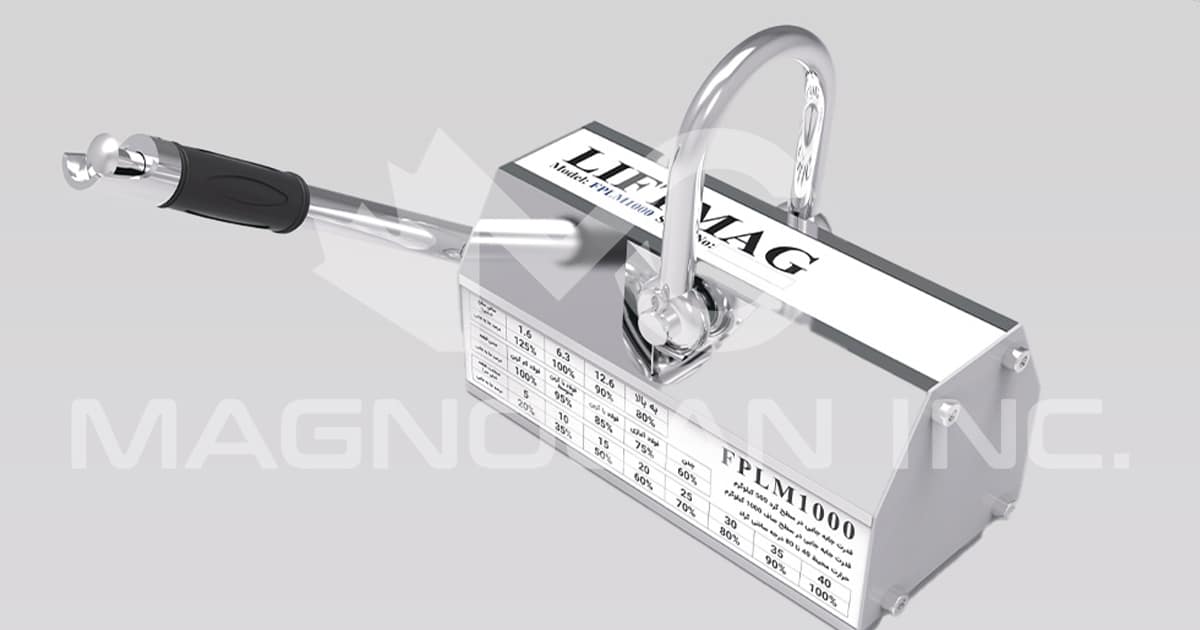
Industrial magnetic trap equipment—from industrial magnets to permanent magnetic devices—plays a vital role in separating metal particles, Lifting Magnets, and handling heavy metallic materials. Thanks to recent advances in magnet production, these devices now offer significant improvements in power, durability, efficiency, and productivity.
These tools are widely used in industries like steelmaking, automotive manufacturing, and metal recycling due to their high power and rapid operation. Additionally, they are effective for separating metals from other materials in mining and chemical sectors. Below is a comprehensive guide to help you select and purchase the best solutions.
Types of Industrial Magnets
Industrial magnets are the backbone of magnetic separation equipment and material handling systems. They generate the magnetic fields needed to extract, lift, or hold ferrous materials in a wide range of processes. Each type of magnet offers specific strengths in terms of power, durability, temperature resistance, and cost. Some are built for continuous, heavy-duty separation, while others are ideal for fine particle recovery or delicate materials. The most commonly used types include ferrite magnets, neodymium (NdFeB), samarium cobalt (SmCo), electromagnets, and hybrid combinations. Choosing the right magnet depends on your application’s needs—such as magnetic strength, operating temperature, material sensitivity, and energy efficiency. Understanding the differences ensures better system performance, product purity, and equipment protection.
1. Permanent Magnet Drum Separator
A Permanent Magnet Drum Separator is an industrial machine used to remove magnetic materials—such as iron or steel particles—from bulk materials or slurries. Unlike electromagnetic systems that require an external power source, this type of separator uses permanent magnets (typically made from materials like NdFeB or ferrite) to generate a constant magnetic field.
How It Works
At the core of the machine is a rotating drum that houses permanent magnets in a fixed internal position. As material (dry or wet) passes over or around the drum:
Magnetic particles are attracted to the surface of the drum and held there by the magnetic field.
The drum rotates, moving these particles to a separate discharge point.
Non-magnetic material continues to flow freely past the drum and exits the system separately.
This process is continuous, low-maintenance, and energy-efficient, since it doesn’t rely on electrical input to maintain magnetic strength.
Where it’s used:
- Recycling plants to remove nails, screws, or iron filings from shredded plastic or glass.
- Food processing plants to ensure products are free from ferrous contamination (e.g., sugar, grain, flour).
- Chemical and plastic industries for bulk material purification.
Advantages:
- Continuous operation with very little supervision
- No need for power supply (uses permanent magnets)
- Low maintenance
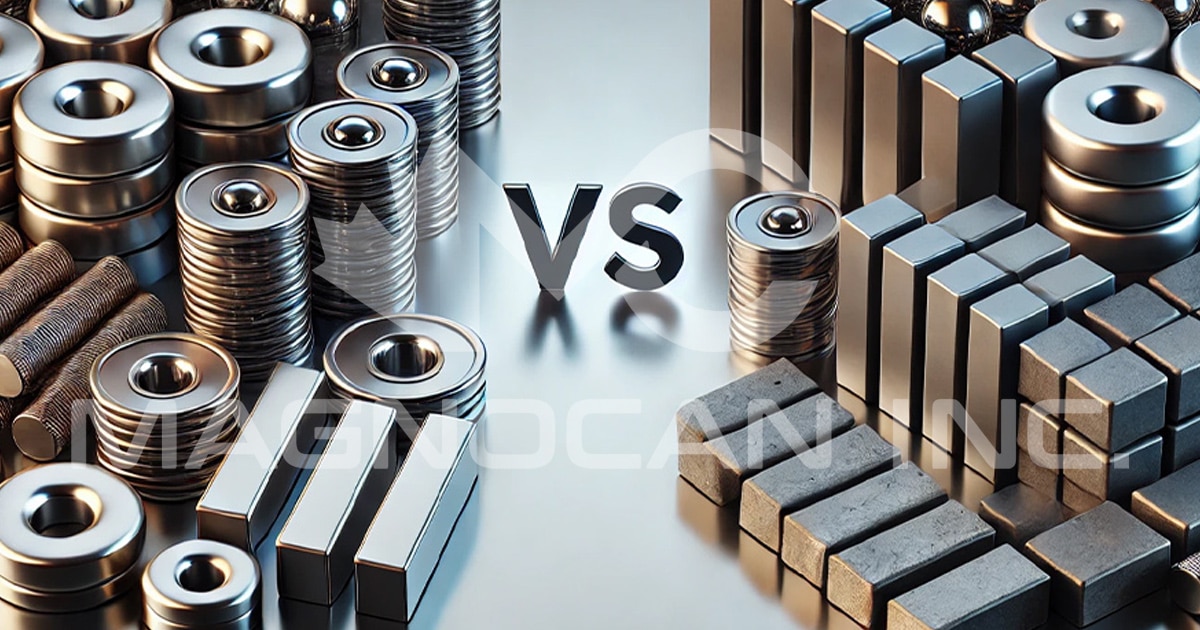
2. Electromagnetic Drum Separator
What is an Electromagnetic Drum Separator?
An Electromagnetic Drum Separator is a type of magnetic separation equipment used to extract magnetic particles—like iron or steel—from bulk materials or slurries. Unlike permanent magnet separators, this version uses an electrically powered electromagnetic coil to generate a magnetic field, offering greater control, adjustability, and intensity.
How It Works
- At the center of the drum is an electromagnetic coil, which is energized with an electric current to produce a magnetic field. As material passes through or around the rotating drum:
- Magnetic particles are attracted to the drum’s surface by the electromagnetic force.
- The drum rotates, carrying these particles to a designated discharge zone.
- Non-magnetic material continues on its path, unaffected by the magnetic field.
- The key advantage of this system is that the magnetic field strength can be adjusted, making it ideal for materials with varying magnetic properties or for processes requiring fine-tuned separation.
Key Advantages
- Adjustable magnetic field intensity (up to 9000 Gauss or more)
- Suitable for weakly magnetic materials
- Can be turned off when not needed (on-demand operation)
- Effective in demanding or fine separation processes
Common Applications
- Fine particle separation in mining and mineral processing
- High-purity product separation in ceramics and chemicals
- Recovering magnetic materials from tailings
- Applications where flexible control over separation is required
3. Magnetic Pulley (Head Pulley)
What is a Magnetic Pulley (Head Pulley)?
A Magnetic Pulley, also known as a Magnetic Head Pulley, is a simple yet powerful magnetic separation device that replaces the standard head pulley of a conveyor belt. It’s used to automatically remove ferrous (iron-containing) materials from bulk flows—without interrupting the production process.
Installed at the discharge end of a conveyor, the magnetic pulley attracts and holds magnetic particles on its surface while the non-magnetic material freely falls off the belt.
How It Works
- Material flows on a conveyor toward the magnetic head pulley.
- Magnetic particles are attracted and held to the pulley’s surface as the belt rotates.
- As the belt moves past the pulley, non-magnetic materials fall off normally due to gravity.
- Captured magnetic materials are carried under the belt and then released into a separate collection area.
- This process is continuous, automatic, and highly effective for removing tramp iron and steel fragments.
Key Advantages
- Continuous separation without additional equipment
- Low maintenance and energy-free (if using permanent magnets)
- Protects downstream crushers, grinders, and screens
- Easily integrated into existing conveyor systems
- Durable design for harsh industrial environments
Common Applications
- Recycling: Removing nails, screws, and ferrous scraps from mixed materials
- Mining and aggregates: Extracting iron from stone, sand, or gravel
- Wood processing: Clearing metal contaminants from chips or mulch
- Food and grain: Ensuring metal-free product in early stages of processing
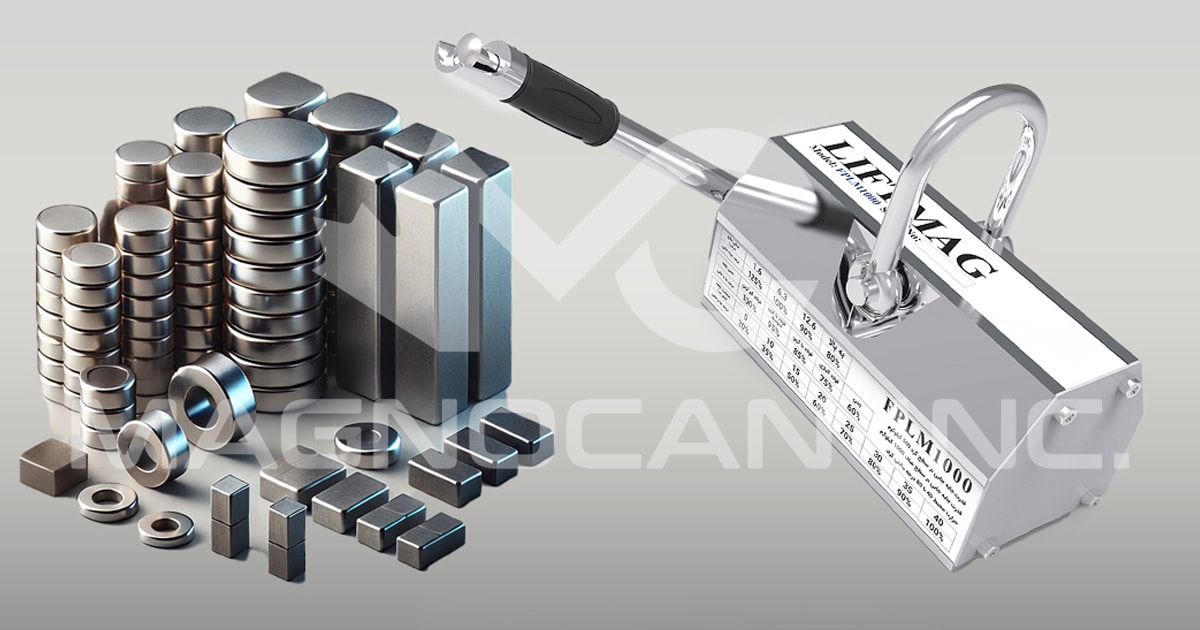
4. Overhead (Suspended) Magnet
What is an Overhead (Suspended) Magnet?
An Overhead Magnet, also known as a Suspended Magnet, is a powerful magnetic separation system that hangs over conveyor belts to automatically remove ferrous metal contaminants from the moving material below. It’s a non-contact solution, meaning it pulls tramp metal up and away without touching the product stream, making it ideal for continuous, high-throughput operations.
How It Works
- The suspended magnet is mounted above a conveyor belt carrying bulk materials like stone, coal, grain, or waste.
- As material moves along the belt, the magnet attracts ferrous objects (nails, rebar, bolts, etc.) from the flow.
- The captured metal is either held in place (manual clean models) or automatically discharged (self-cleaning models using a moving belt or scraper).
This system prevents damage to crushers, grinders, and other downstream equipment by catching metal contaminants before they cause problems.
Types of Suspended Magnets
- Permanent Suspended Magnets: Energy-free operation, lower maintenance, suitable for lighter loads.
- Electromagnetic Suspended Magnets: Stronger and adjustable magnetic fields, ideal for deeper or faster material flows.
- Self-Cleaning Models: Feature a built-in belt system to automatically remove captured metal—ideal for continuous operations.
- Manual-Clean Models: Require periodic shutdown for cleaning; suitable for light-duty or intermittent use.
Key Advantages
- Prevents equipment damage and downtime
- No contact with product—preserves material integrity
- Low operating cost (especially permanent types)
- Works with a variety of conveyor systems
- Effective for both fine and bulky ferrous contaminants
Common Applications
- Mining & Quarrying: Protect crushers and screens from tramp iron
- Recycling: Remove metals from shredded material or MSW
- Cement & Aggregates: Clean stone, gravel, or sand before processing
- Wood & Biomass: Extract nails and metal debris from wood chips
- Food & Grain (preliminary stage): Remove bolts or wire from bulk grain before fine processing
5. Plate & Grid Magnetic Separator
What is a Plate & Grid Magnetic Separator?
Plate and Grid Magnetic Separators are compact magnetic devices designed to remove ferrous contaminants—such as iron filings, screws, and metal fragments—from dry or semi-dry flowing materials. They are most commonly installed in gravity-fed chutes, hoppers, ducts, or bins, where bulk materials pass over or through a magnetic field for efficient separation.
These separators are ideal for applications requiring fine or tramp iron removal from powders, granules, or free-flowing solids in industries like food processing, pharmaceuticals, plastics, and chemicals.
Types and How They Work
- Plate Magnetic Separator
- A magnetized plate is mounted along the inside surface of a chute or housing.
- As material flows past, magnetic contaminants are pulled toward the plate and held there.
- Periodically, the plate is cleaned manually to remove collected metal.
Best For: High-volume product flow, shallow layers of material
Common Uses: Ceramic powder, plastic pellets, sugar, salt
- Grid Magnetic Separator (Also called Magnetic Grate or Hopper Magnet)
Consists of multiple magnetic bars arranged in a grid pattern inside a frame (typically square or round). - Material flows through the grid, and metallic particles are attracted to the bars.
- Grids are easily removed and wiped clean.
Best For: Finer powders or slower material flow
Common Uses: Flour, spices, pharmaceutical powders, plastic granules
Key Advantages
- Compact and easy to install in chutes, hoppers, or ducts
- No energy required (permanent magnets)
- Effective even at low flow rates
- Protects downstream equipment
- Improves product purity and consistency
Applications
- Food industry: Removal of metal from flour, grains, spices, sugar
- Pharmaceuticals: Ensuring contamination-free powders and tablets
- Plastics: Removing metal fragments from resins and granules
- Chemical processing: Purifying powders before mixing or packaging
- Ceramics and minerals: Capturing iron from fine clay or feldspar
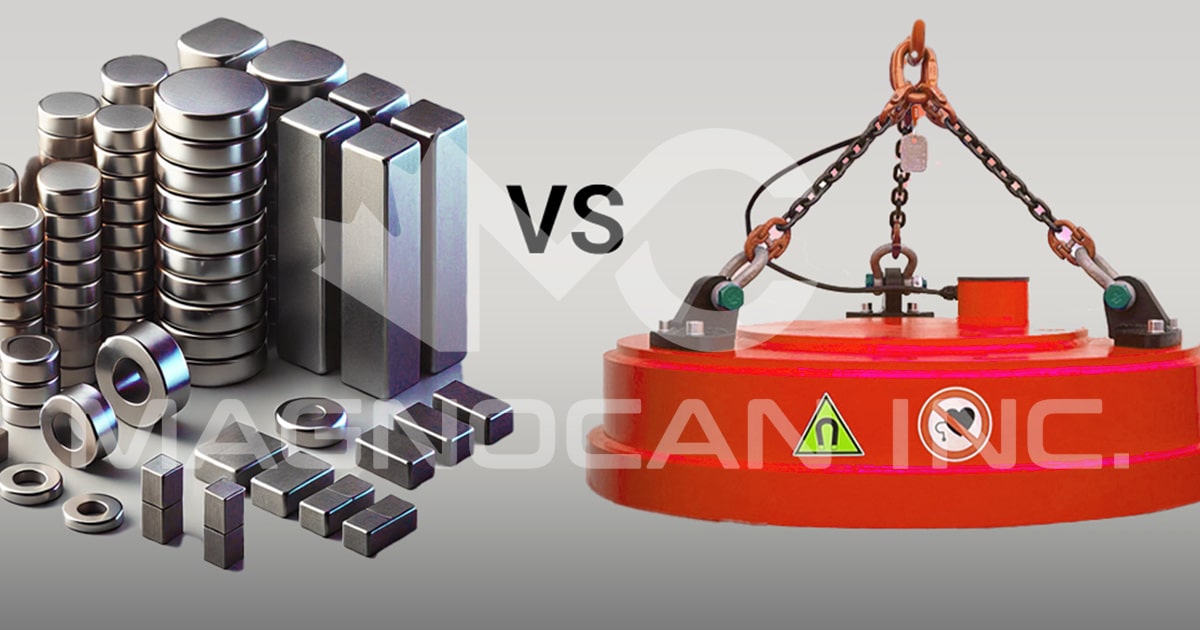
6. High‑Intensity Magnetic Separator
What is a High‑Intensity Magnetic Separator?
A High-Intensity Magnetic Separator (HIMS) is a powerful magnetic separation device used to capture very weakly magnetic particles from a mixture—materials that traditional low-intensity magnets can’t effectively remove. These separators are essential when dealing with paramagnetic minerals (like hematite, ilmenite, chromite, and garnet), ultra-fine iron contaminants, or in processes requiring high-purity output.
They are widely used in mining, metallurgy, ceramics, chemicals, electronics, and even food industries, where precision and magnetic strength make all the difference.
How It Works
Unlike standard magnetic separators, HIMS units use extremely strong magnetic fields, generated by:
- Electromagnetic coils, or
- High-grade permanent magnets (such as rare-earth magnets like NdFeB)
As the material flows through the separator:
- The high-intensity magnetic field attracts even weakly magnetic or fine iron particles.
- Magnetic particles are pulled away from the rest of the material stream and collected.
- Non-magnetic material continues on its path, unaffected.
Depending on the model, the machine may use a rotating drum, vibrating chute, or matrix-type grid to optimize separation.
Key Advantages
- Separates weakly magnetic materials that standard separators miss
- High-gradient magnetic field for finer and more selective separation
- Customizable intensity and flow rate
- Improves final product purity
- Essential for rare earth, ceramic, and ultra-fine mineral applications
Common Applications
- Mineral Processing: Separating hematite, ilmenite, wolframite, chromite
- Ceramics & Glass: Removing fine iron from quartz, feldspar, and kaolin
- Chemical & Pharmaceutical: Purifying raw materials for high-purity production
- Electronics: Removing tiny metallic particles from fine powders
- Food Industry (select uses): Ensuring ultra-clean ingredients in sensitive products
7. Eddy‑Current Separator (ECS)
What is an Eddy-Current Separator (ECS)?
An Eddy-Current Separator (ECS) is a high-tech separation system used to recover non-ferrous metals—such as aluminum, copper, and brass—from mixed waste streams. Unlike magnetic separators that attract ferrous metals, an ECS repels conductive, non-magnetic metals using powerful, rotating magnetic fields.
ECS is a must-have in recycling plants, material recovery facilities (MRFs), automotive shredder residue (ASR) processing, and e-waste operations, where maximizing metal recovery and material purity is key to both efficiency and profitability.
How It Works
- Material is fed onto a fast-moving conveyor belt.
- At the discharge end, a high-speed rotating magnetic drum (fitted with rare-earth magnets) creates a rapidly changing magnetic field.
- This changing field induces eddy currents in any conductive non-ferrous metals.
- The eddy currents generate opposing magnetic forces that cause these metals to “jump” away from the belt into a separate discharge area, while non-metallic and ferrous materials drop off normally.
Think of it as using magnetism to “push away” non-magnetic metals.
Key Advantages
- Efficient separation of non-ferrous metals from waste streams
- No contact required – clean, low-maintenance operation
- Increases recycling value and reduces landfill waste
- Ideal for high-throughput systems
- Improves purity of both metallic and residual waste fractions
Common Applications
- Recycling Facilities: Recovering aluminum cans, copper wire, and metal flakes
- Automotive Shredding (ASR): Separating non-ferrous metals from shredded car components
- WEEE / E-Waste Processing: Extracting valuable metals from electronics
- Construction & Demolition Waste: Recovering building-related aluminum and copper
- Municipal Solid Waste (MSW): Enhancing material recovery in sorting lines
Choosing the Right Magnet – and the Right Partner
At the core of every magnetic separator is its magnet system—and choosing the right type is essential for getting the performance you need. Permanent magnets like NdFeB (Neodymium) and ferrite offer reliable, energy-efficient operation with minimal maintenance. For processes that require adjustable or high-intensity separation, electromagnets provide greater flexibility and power. Whether your goal is maximum recovery, high-purity separation, or equipment protection, selecting the right magnet type is key to achieving optimal results.
At Magnocan, we specialize in helping industries make the right choice. From technical consultation to custom-built solutions, our team is here to guide you through every step of the process.
Contact us today to discuss your application or request a tailored quote. We’re ready to help you build a cleaner, more efficient, and more profitable operation.